
Storm Leads Change Roofing Marketing ROI for Contractors
Roofing marketing ROI comes down to three drivers: lead quality, close rate, and average job value. A low cost per lead only helps when the leads convert and the jobs stay large. As a conservative yardstick, a qualified lead that converts on a typical re-roof should pay back your spend, depending on lead quality, job value, and costs. We built our storm-response system around raising that lead quality.
TL;DR:
- Compare channels by booked job cost rather than lead cost; paid search brings volume quickly, SEO takes months to mature, and referrals have limited scale.
- Roofing companies typically earn 20% to 40% gross profit, so calculate returns against gross profit rather than revenue to avoid overstating marketing performance.
- Treat channel benchmarks as sanity checks, not market guarantees; geography, storm timing, landing page quality, and lead screening can all change close rates and costs.
- Storm leads can close faster when a person verifies them and territory access is exclusive, but prompt routing and estimates still determine whether they convert.
- Track leads from source through booking in a CRM, review cost per job and close rate weekly, and hold spending steady until attribution is reliable.
Table of Contents
- Which marketing channels do roofers use, and what should you expect from each?
- How do you calculate roofing marketing ROI?
- What CPL and ROI ranges should you expect by channel?
- Which tactics improve roofing marketing ROI most reliably?
- How should you measure and attribute roofing ROI?
- Why does proactive storm response change the ROI math?
- The ROI mistakes I see most, and a checklist to avoid them
- How our storm-response system fits your ROI playbook
- FAQ
- Sources
Which marketing channels do roofers use, and what should you expect from each?
Every channel trades speed, cost, and reliability differently. Mapping them before you spend keeps you from judging a slow channel by a fast channel’s standards.
- Paid search (Google Ads): Fast volume and tight targeting, but usually the higher cost per lead. Quality depends on your landing page and how fast you answer.
- Local SEO and Google Business Profile: Slow to ramp, then cheaper per lead over time. It builds value that keeps paying after you stop spending.
- Referrals and partnerships: High conversion and almost no direct cost per lead, but limited scale. Speed of response, reputation, and follow-up decide how many of these you win, as a Roofing Contractor profile of a growing roofer points out.
- Direct mail and local promotions: Variable cost per lead. Best for a specific neighborhood or a post-storm push.
- Storm-response and verified-demand channels: Homeowners with real damage are already looking for a roofer, so qualified leads tend to close faster. This only holds when someone verifies the lead before it reaches you.
- Social and display ads: Good for awareness, weaker on conversion unless a tight funnel sits behind them.
Directories and classifieds such as Craigslist can add cheap local reach, though lead quality swings widely.
How do you calculate roofing marketing ROI?
Use the same four formulas for every channel so comparisons stay fair:
- Cost per lead (CPL) = total marketing spend ÷ number of leads.
- Cost per booked job = total marketing spend ÷ booked jobs, or CPL ÷ close rate.
- ROI % = (revenue from jobs − marketing spend) ÷ marketing spend × 100.
- Payback period = how many weeks of job revenue it takes to recover the spend.
Here is a worked example with illustrative numbers, not market data. Say you spend $5,000 and get 50 leads, so CPL is $100.
Revenue is not profit. Roofing Contractor reported that typical roofing companies earn between 20 and 40 percent gross profit, so run the same math on gross profit to see your true return.
Gross margin matters more than the headline ROI: typical roofing gross profit runs 20 to 40 percent, which means a high revenue ROI can shrink sharply once costs are counted.
Add lifetime value only if you track repeat work or referrals from past customers. If you pay for territory exclusivity, count it as a cost, then credit it with the wasted leads it removes. To model scenarios quickly, try this cost per lead calculator.
What CPL and ROI ranges should you expect by channel?
Treat any benchmark as a sanity check, not a promise. Your market, season, and sales process move every number below, and we are not quoting measured industry data here. Use these as a way to question a vendor pitch:
- Paid search: Usually your highest CPL, offset by fast volume. Ask what share of those leads are qualified, not just form fills.
- Local SEO: Lower CPL once it matures, but expect months before it produces steady calls.
- Referrals: The lowest direct CPL, with a ceiling set by how many happy customers you have.
- Storm-driven leads: Higher CPL than most channels, justified only when close rate and job size rise with it.
- Direct mail: Wide variation. Track by campaign, never in aggregate.
- Social: Cheap leads on paper, often poor intent.
A vendor’s CPL claim means little without a close rate beside it. Ask for both, then compare cost per booked job.
Four drivers explain most of the gap between a good and bad result. First, geography: dense suburbs and rural counties price leads differently. Second, storm seasonality: demand spikes after hail and wind events, and so does competition. Third, ad and landing page quality: a weak page wastes good clicks. Fourth, your qualification process: filtering out tire-kickers raises close rate without changing CPL.
Margin also shifts your break-even point.
Which tactics improve roofing marketing ROI most reliably?
Marketing and operations have to move together. A great lead that waits two days for a callback is a wasted lead.
- Qualify fast. Use a short form and a human call screen so your crew only drives to real prospects.
- Build one-action landing pages. One offer, one button, one booking flow. Clutter lowers conversion.
- Track calls. Use call tracking and dynamic number insertion, then send closed-job data back to the ad platform. Our DNI setup checks cover the details.
- Keep campaigns clean. Maintain negative keywords and storm-page exclusions; our negative keyword guide lists the categories.
- Standardize follow-up. Use scripts for each sales stage and proposal templates so estimates go out the same day. We share four lead script templates for this.
Pro Tip: Time how long your team takes to call back a new lead this week. If it is more than a few minutes during storm season, fix that before you buy another click.
How should you measure and attribute roofing ROI?
You cannot optimize numbers you do not trust. The minimum stack is a CRM, call tracking, Google Ads and Analytics, and offline conversion import. Follow these steps:
- Set consistent lead-status definitions (new, contacted, estimated, booked, lost) so every team member labels leads the same way.
- Turn on dynamic number insertion and call recording so phone leads trace back to a source.
- Import booked-job revenue into your ad platform; our guide to offline conversion tracking walks through it.
- Review a weekly flash report covering leads by source, CPL, close rate, average job value, cost per job, and jobs per week. Roofing Contractor recommends weekly flash reports for tracking performance.
- Shift budget monthly: feed what produces booked jobs, hold what builds long-term value, and cut what only produces form fills.
Why does proactive storm response change the ROI math?
Most roofing marketing waits for a homeowner to start searching. We approach it the other way: our team prepares your campaigns, landing pages, and CRM routing before a storm, so you are live when damage happens and demand is active.
From our work with roofing contractors, three things lift effective ROI. First, verified storm leads tend to close faster than cold leads because the homeowner already has a problem to solve. Second, human verification and territory exclusivity cut wasted leads, since you are not splitting the same homeowner with a rival; see our eight questions for vetting storm lead vendors. Third, none of it pays off without operational readiness: fast estimates, clear sales scripts, and routing that gets a lead to a person in minutes. The marketing creates the opening, and your response speed captures it.

The ROI mistakes I see most, and a checklist to avoid them
The most common error is stopping the math at leads. A cheap lead that never books is the most expensive lead you can buy. So measure to booked jobs and revenue, always.

Pair every CPL benchmark with a close-rate check and your average job size. Then add guardrails before you scale: a weekly review, a cost-per-job ceiling, and a minimum sample of leads before you judge a channel.
My checklist: Do I know my cost per booked job? Do I know my margin? Does every lead have a source? If any answer is no, hold spend flat until it is yes.
— Angel
How our storm-response system fits your ROI playbook
Our system is built for roofers who do storm work or want a faster route to high-converting leads. Here is what you get:
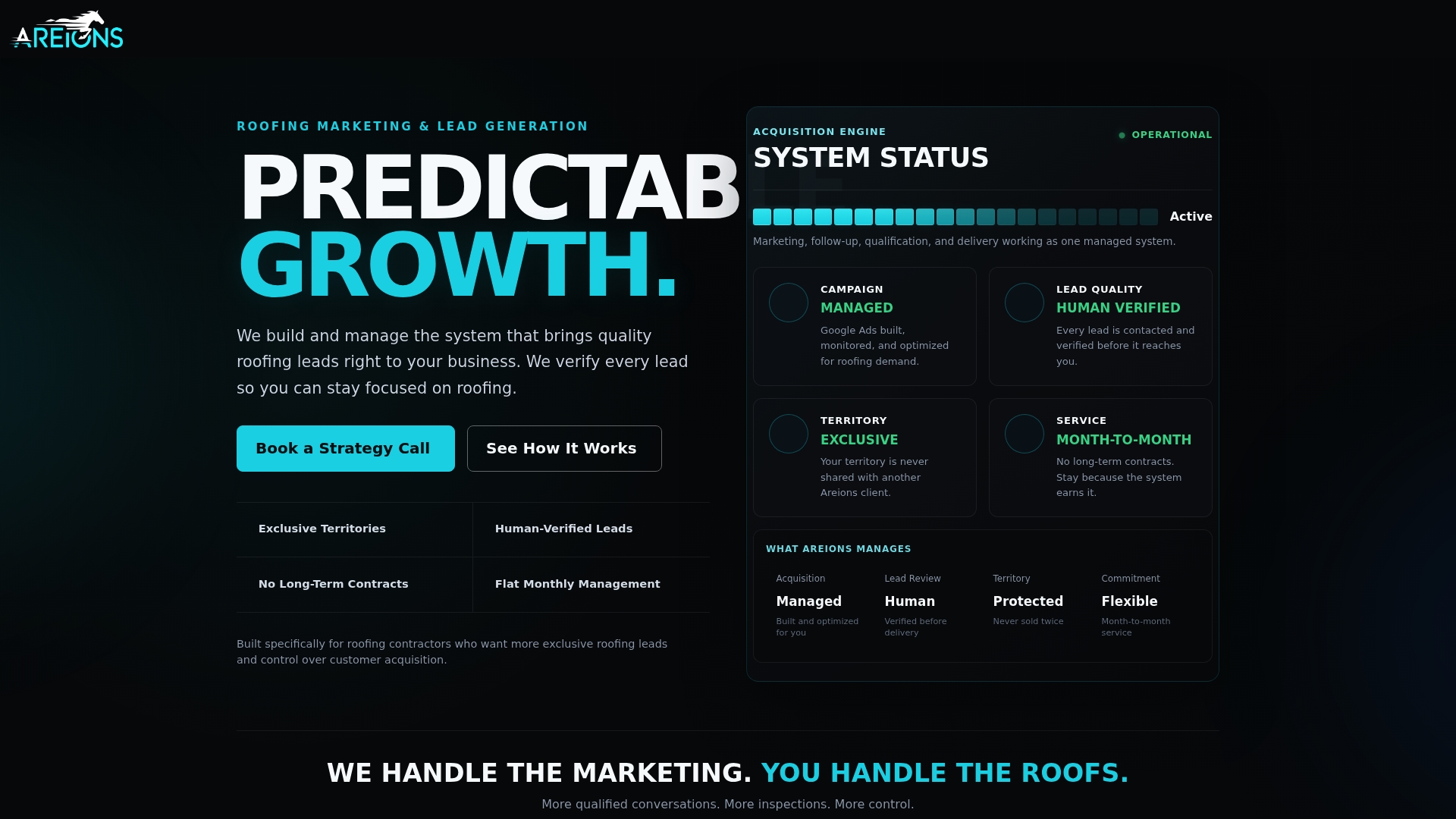
- Human-verified storm leads delivered straight to your CRM
- Managed campaigns, landing pages, call tracking, and follow-up automation
- Territory exclusivity so competing contractors do not share your leads
- Month-to-month plans with no long-term contract, plus ongoing optimization
We offer three plans, Foundation, Professional, and Enterprise, so you can match the level of service to your business. If you want to see how the numbers would work in your territory, book a strategy call and we will walk through it with you.
FAQ
Is roofing a profitable business?
Yes, it can be, but margins are tighter than revenue suggests. Roofing Contractor reported that typical roofing companies earn between 20 and 40 percent gross profit, and profit after owner payments is far lower. Tracking cost per booked job protects the margin that remains.
What is a good ROI for marketing?
It depends on your margin and how you count revenue. Compare gross profit from booked jobs against marketing spend, not revenue alone. A channel that returns several dollars of gross profit per dollar spent is generally healthy, while one that only breaks even needs a closer look.
What is the 25% rule in roofing?
There is no single official rule by that name, and definitions vary. Check any rule of thumb against your own close rate before relying on it.
What is the 3-3-3 rule for marketing?
Definitions vary, and no standard version applies specifically to roofing. Use a rule of thumb as a prompt to set channels, goals, and review points, then judge each by cost per booked job. Your own tracked numbers matter more than any rule of thumb.