
Roofing Negative Keywords: Six Categories, Storm Pages, and Upkeep
Start by blocking six categories of noise at the account level today: DIY and how-to searches, job and career queries, wholesale and cheap-material terms, unrelated home services, tutorial content, and generic “what is” research phrases. These account for the bulk of clicks that never turn into a roofing job, and pulling them out first clears the way for sharper, more targeted lists built from your own search terms report.
TL;DR:
- Use broad negatives for account level DIY, job, and informational searches, but reserve phrase match for materials and service exclusions that may overlap with leads.
- Keep hail damage and insurance claim searches active, but exclude forecasts and hail maps so storm negatives do not block repair prospects.
- Negative broad match suits DIY and job terms, phrase match fits ordered exclusions, and exact match should target individual queries found in search terms reports.
- Review search terms monthly and weekly during storms; test changes in one campaign, then monitor conversions and lead quality for a week before wider rollout.
- Match each ad to a relevant landing page with one clear call to action and a short form asking for the address and damage type.
Table of Contents
- Why search intent separates hire-ready homeowners from junk traffic
- Negative keyword categories and starter lists you can paste into Google Ads
- Negative match types and the right scope to apply them
- Maintenance cadence: test, prune, and monitor negative lists without killing qualified traffic
- Landing page and ad alignment: a practical checklist
- A checklist to hand your PPC manager or agency
- If you want a managed option: our lead-generation system
- FAQ
- Sources
Why search intent separates hire-ready homeowners from junk traffic
A homeowner typing “roof leak repair near me” is ready to call someone. A homeowner typing “how to fix roof leak myself” is trying to avoid calling anyone. Both queries can trigger the same ad if your negative keyword list is thin, and both cost you the same click price. The difference is intent, and intent is the only thing that predicts whether a click turns into a signed job.
Three quick comparisons show the pattern:
- Hire-ready: “emergency roof repair,” “roofing contractor quote,” “replace roof after hail damage”
- Research or DIY: “how to patch a roof yourself,” “roof shingle types comparison,” “DIY roof repair cost”
- Job seeking: “roofing jobs near me,” “roofer salary,” “roofing apprenticeship”
Each of these three groups can share overlapping words like “roof,” “repair,” or “shingle,” which is exactly why broad match keywords without negatives waste budget. Google Ads is built to catch loosely related searches, so a campaign running on broad or phrase match without a negative list will surface all three groups under one ad spend.
The fix is not blocking roofing words. It is blocking the modifiers that signal the wrong job: “how to,” “jobs,” “salary,” “DIY,” “free,” “cheap,” “wholesale.” Those modifiers are what separate a homeowner ready to hire from someone who will never become a customer, no matter how good your ad copy is.

Negative keyword categories and starter lists you can paste into Google Ads
Organize your negatives by theme rather than dumping everything into one list. Google Ads lets you build shared negative keyword lists and apply them across multiple campaigns, which keeps maintenance manageable as your account grows.
DIY and how-to terms. Apply as broad match negatives at the account level, since almost no version of these queries converts to a paid job.
- how to fix a roof
- DIY roof repair
- roof repair tutorial
- replace shingles myself
- patch roof yourself
- roofing for dummies
Job and employment terms. Apply as broad match at the account level. These searches have zero purchase intent and show up constantly in roofing accounts.
- roofing jobs
- roofer salary
- roofing apprenticeship
- hiring roofers near me
- roofing crew jobs
- roofing company careers
- roofer hourly wage
Materials research and wholesale terms. Apply as phrase match, since some of these overlap with legitimate commercial searches from contractors buying supplies, which you may want to exclude at the campaign level rather than account-wide.
- wholesale roofing shingles
- roofing materials supplier
- buy shingles bulk
- roofing supply store near me
- shingle manufacturer
- metal roofing panels price per square foot
Commercial-only and price-shopper terms. Apply as phrase match at the campaign level if your business only serves residential customers.
- commercial roofing contractor (when you only serve residential)
- cheap roof repair
- free roof inspection (unless you actually offer one)
- discount roofing company
- lowest price roof replacement
- roofing coupons
Informational modifiers. Apply as broad match account-wide. These words almost always indicate research, not hiring intent.
- what is
- definition
- meaning
- types of
- comparison
- vs
- pros and cons
Unrelated home services. Apply as phrase match at the ad group level, tailored to whichever services you do not offer.
- solar panel installation
- gutter cleaning only
- siding repair (if you do not offer siding)
- window replacement
- chimney sweep
Storm season adds a layer of nuance that a blanket negative list will get wrong. Keep high-intent damage terms like “hail damage,” “roof storm damage,” and “roof insurance claim” active, since these are the searches from homeowners who actually need a repair. Exclude the modifiers that indicate someone is just checking the weather or browsing news: “hail map,” “storm forecast,” “hail pictures,” and “how to hail-proof a roof.” The JobNimbus roofing blog describes this exact paradox: blocking “hail” or “storm” wholesale removes your highest-value leads along with the noise, while a surgical list preserves the damage and claim language while cutting the forecast chasers.
Negative match types and the right scope to apply them
Negative keywords come in three match types, and mixing them up is one of the most common ways roofing accounts leak budget. Negative broad match blocks any search containing all your keyword’s terms in any order. Negative phrase match blocks searches containing your exact phrase in that order, plus close variants. Negative exact match blocks only that specific search term.
- Negative broad match: best for wide noise categories like job searches or DIY terms
- Negative phrase match: best for multi-word exclusions where order matters, like “roofing jobs near me”
- Negative exact match: best for a single problem query identified in your search terms report
A common pitfall is applying negative exact match when you meant negative phrase, which leaves dozens of close variants still live and burning budget. Another is adding a negative broad match term that is too generic, which can accidentally block legitimate searches that happen to share a word.
For scope, add your widest, most universal negatives (DIY, jobs, informational modifiers) as a shared list at the account level so every campaign inherits them automatically. Save ad-group-level negatives for service-specific exclusions, such as blocking “flat roof” in an ad group dedicated to pitched residential roofs. Google Ads caps the number of shared negative keyword lists per account and the keywords per list, so consolidating by theme matters as your account scales.
Statistic callout: Negative keywords for Display and Video campaigns behave differently than Search, since Google Ads treats all negatives in those placements as broad match regardless of how you entered them. That means a negative you intended as exact match on Display will exclude a wider set of placements than expected, so Performance Max and Display campaigns need separate review rather than assuming your Search negatives carry over cleanly.
Maintenance cadence: test, prune, and monitor negative lists without killing qualified traffic
A negative keyword list is never finished. New noise terms show up as search behavior shifts, and a negative that made sense last storm season might block a term that matters this year.
- Review the search terms report monthly during normal season and weekly during active storm periods
- Watch click-through rate, cost per conversion, and lead quality for at least a week after any large negative addition
- Roll back a specific negative immediately if conversions drop and the timing lines up with that change
- Test incrementally: add negatives to one campaign first, observe the impact, then roll out to the rest of the account
A quarterly audit keeps the list honest. Pull the full negative list, check for duplicates across shared lists and ad groups, and remove any negative that no longer matches current search patterns, such as an old competitor name you no longer need to exclude.
Pro Tip: Pair any batch of 20 or more new negatives with a short holdout test, running the old list on half your budget and the new list on the other half for a week, so a drop in volume doesn’t get misread as a drop in quality.
Landing page and ad alignment: a practical checklist
Negative keywords only solve half the problem. Even a perfectly clean keyword list underperforms when the landing page does not match what the searcher expected. According to JobNimbus, roofing accounts commonly fail not because of bad targeting but because the ad promises one thing and the landing page delivers something generic, which can cut conversion by several multiples even when the traffic itself is high intent.
A landing page built to pre-qualify storm-damage traffic should include:
- The specific service named in the ad headline, not a generic “roofing services” page
- A visible verification step or badge indicating storm-damage inspection is available
- A short qualification form asking for address and damage type before a full quote request
- A clear, singular call to action rather than multiple competing buttons
Our team builds campaigns around this exact alignment problem, matching ad copy, landing page content, and storm-response timing so that a homeowner searching “hail damage roof repair” during an active storm event lands on a page built specifically for that moment, not a static services page built for year-round traffic.
A checklist to hand your PPC manager or agency
Here is what we would fix first if we inherited a roofing account today, in order of impact:
- Add the account-level negative list for DIY, jobs, and informational terms. This alone usually cuts wasted spend within the first week.
- Pull 60 days of search terms and flag every non-converting repeat offender. This finds the noise specific to your market.
- Split storm-damage negatives carefully, keeping “hail damage” and “insurance claim” while cutting “hail map” and “storm forecast.”
- Check that every active ad group has a matching landing page, not a shared generic page.
- Set a monthly review cadence so the list stays current instead of going stale.
If you are handing this off to an agency, give them read access to your search terms report, your current negative keyword lists, and your call tracking data so they can audit against real performance, not guesses.
— Angel
If you want a managed option: our lead-generation system
Building and maintaining a clean negative keyword list takes consistent attention, and storm-driven roofing demand moves fast enough that a stale list or a mismatched landing page can cost real jobs in the hours after a storm hits. If you would rather hand that operational load to a team built specifically for roofing, we manage the entire system for you.
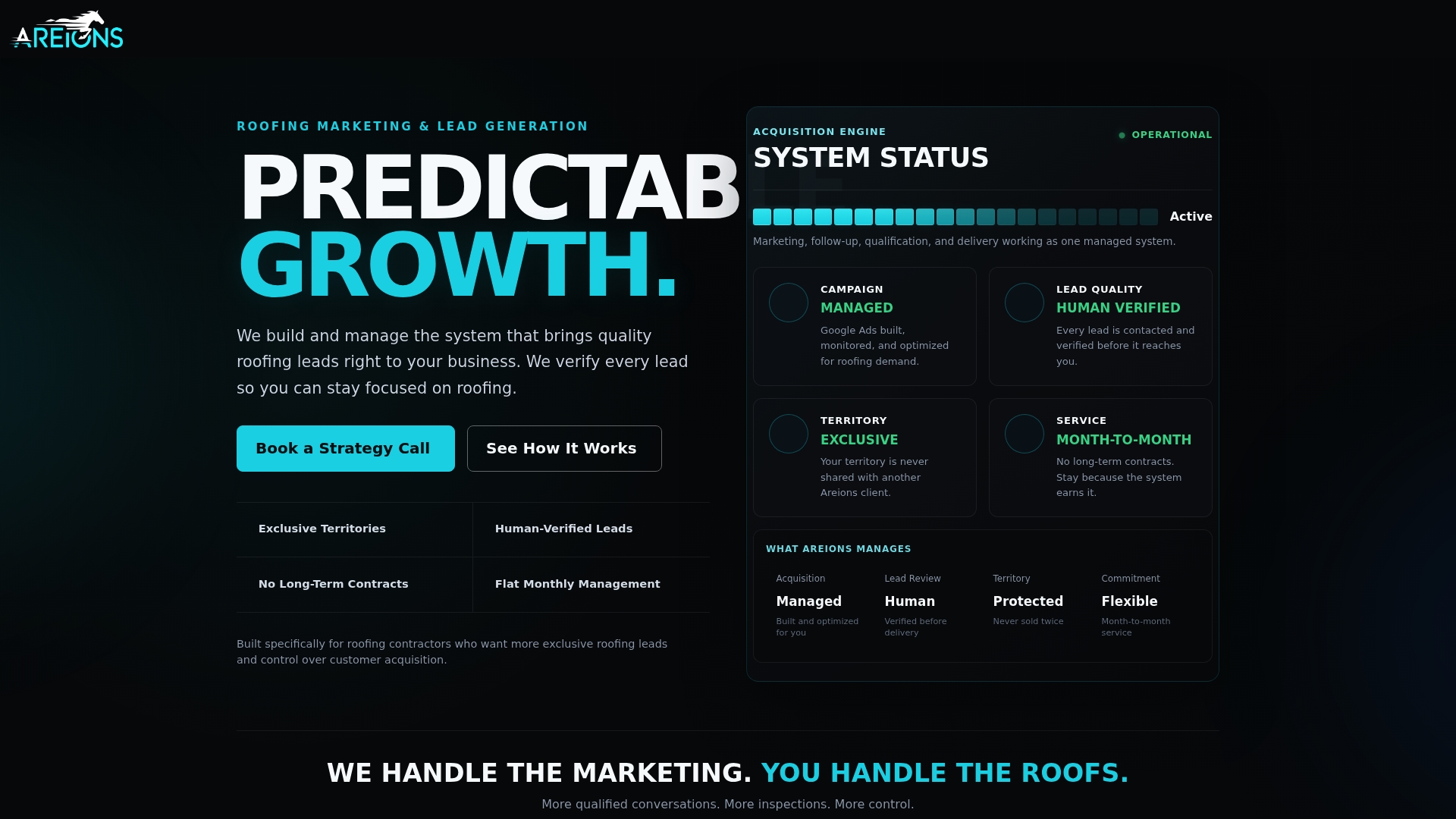
We run a proactive storm-response system that gets your campaigns and landing pages ready before a storm hits, then intercepts active demand from homeowners with verified storm damage once it does. Every lead sent is human-verified before it reaches your CRM, and plans run month-to-month with no long-term contract, so you are never locked in if your needs change. Territory exclusivity is offered, meaning you are not competing against another roofing company served in your area.
For teams handling call tracking and CRM routing themselves, integrating call data with your CRM is worth doing well regardless of who manages your ads. But if you want the whole system, from campaign management to lead qualification, built and run for you, book a strategy call and we will walk through what a storm-ready setup looks like for your market.
FAQ
What are examples of negative keywords?
Common examples for roofing accounts include “DIY roof repair,” “roofing jobs,” “cheap roof repair,” and “roofing salary.” These terms attract clicks from people researching, job hunting, or price shopping rather than homeowners ready to hire a contractor.
What are some good taglines for a roofing business?
Effective roofing taglines typically emphasize speed, reliability, or local trust, such as phrases built around fast response times or storm-damage expertise. There is no single industry-standard tagline; the best one reflects what your business can actually deliver and verify.
What are some roofing terms?
Common industry terms include “flashing,” “underlayment,” “shingle courses,” “ridge vent,” and “valley,” along with damage-related terms like “hail damage” and “wind uplift.” Homeowners researching these terms are often in an early information-gathering phase rather than ready to hire.
What is the 25% rule for roofing?
Roofing terminology and codes vary by jurisdiction and are not standardized under a single universal “25% rule,” so definitions of this term differ depending on the context, such as local building codes about roof replacement percentage thresholds. Check your local permitting authority for the specific rule that applies in your area rather than relying on a general definition.
Sources
Your own account data is the best source of negatives, better than any generic list, because it reflects exactly what your ads are triggering for.
- Get negative keyword ideas using the search terms report - Google Ads Help
- Why ‘Set-It-and-Forget-It’ Google Ads Fail Roofing Companies - JobNimbus
Call recordings and form disqualifiers catch intent that search terms alone can miss. A homeowner might click a well-targeted ad, then say on the call that they are a roofing supplier looking for wholesale pricing, or a journalism student researching a school project. Reviewing a sample of calls and form submissions each month surfaces these edge cases before they become a pattern worth blocking.
Pro Tip: Add new negatives in small batches rather than all at once. A single overly broad negative can cascade into blocking legitimate hire-ready traffic you never meant to exclude, and it’s much easier to diagnose the problem with 10 new negatives than with 100.