
Roofing DNI: 6 Setup Checks to Trace Storm Calls to Jobs
Yes, dynamic number insertion (DNI) is a practical, trackable way for roofing businesses to identify which ads, keywords, and pages produce phone leads. The first move is deciding your attribution granularity, channel-level numbers for broad source tracking or a website number pool for page-level detail, before touching any code. Platforms like CallRail and Google Ads both support this, and managed providers like Areions build it into full storm-response lead systems.
TL;DR:
- Choose channel numbers for broad source reporting or a website pool for page and keyword detail, sized for peak storm traffic rather than average volume.
- Install JavaScript sitewide before page rendering, then test every page and device manually because caching, mobile dialing links, and page builder tools can disrupt swaps.
- Capture tracking numbers, landing pages, session IDs, and campaign parameters in CRM, then import signed jobs to ad platforms to measure ROI beyond calls.
- If calls are recorded for quality or AI scoring, play consent disclosure before recording starts and retain consent logs under one consistent company policy.
Table of Contents
- What DNI means for roofing lead generation
- How DNI works: snippet, swap target, number pools, and cookies
- Setting up DNI on a roofing website: a step-by-step checklist
- Testing and validating your DNI setup
- Turning call data into CPL, keyword ROI, and closed-won attribution
- Call recording compliance and operational notes
- How Areions builds DNI into a storm-response lead system
- What actually moves the needle for roofers
- Areions: managed storm-response lead generation built around DNI
- FAQ
- Sources
What DNI means for roofing lead generation
For a roofing company, dynamic number insertion swaps the phone number displayed on your website based on how a visitor arrived, whether from a Google Ads click, an organic search, a Facebook post, or a direct visit. Each source sees a different tracking number, and when that visitor calls, you know exactly which marketing effort produced the lead.
This matters most when demand spikes. During a hail event or wind damage cycle, you might be running paid search, display retargeting, and organic landing pages simultaneously. Without DNI, every call looks identical in your phone system. With it, you can see which keyword or ad group drove the call and shift budget toward the channels producing actual jobs, not just clicks.
The practical benefits show up quickly:
- Clear cost-per-lead (CPL) numbers broken down by channel instead of a blended guess.
- Keyword-level insight into which search terms generate calls versus form fills.
- Visibility into organic and direct calls that would otherwise get credited to the wrong source or missed entirely.
How DNI works: snippet, swap target, number pools, and cookies
The mechanics behind DNI are straightforward once you separate the pieces. A JavaScript snippet from your provider loads before the closing head tag on every page, that placement matters because the script needs to run before the page renders the phone number, catching it in time to swap it out. According to CallRail’s documentation, the snippet identifies the visitor’s traffic source, then replaces a designated “swap target” (usually the phone number text or a styled span) with a tracking number pulled from your pool.
A few terms are worth knowing before you start:
- Swap target: the specific HTML element the script looks for and replaces with a tracking number.
- Destination number: the real number calls forward to, usually your office or call center line.
- Tracking numbers and website pools: individual numbers assigned per channel, or a larger pool assigned dynamically per visitor for page-and-keyword level detail, a distinction CallRail’s help center walks through in detail.
Cookies store the assigned number for a return visit, which keeps attribution consistent if someone browses multiple pages or comes back later in the same session. Cross-subdomain tracking requires extra configuration if your site spans a blog subdomain or a separate landing page domain. Privacy tools, aggressive cookie blockers, and some WordPress caching plugins can interfere with the swap, so plan for occasional attribution gaps rather than assuming perfect coverage.
Setting up DNI on a roofing website: a step-by-step checklist
Treat this as a checklist you can hand to a developer or an agency managing your campaigns.
- Decide your attribution level: channel-level numbers for broad source data, or a website pool for page and keyword granularity.
- Inventory every place a phone number appears on your site, header, footer, landing pages, and blog posts included.
- Install the provider’s JavaScript snippet before the closing head tag on every page and confirm the swap target matches your actual phone number markup.
- Create tracking numbers or a pool sized for your peak simultaneous traffic, then configure routing so calls forward to the correct destination number or call center.
- Add Google’s phone snippet or enable Google forwarding numbers if you’re running Google Ads call conversion tracking, and turn on call reporting with clear conversion rules.
- Connect call records to your CRM using the tracking number, session or cookie ID, and gclid or UTM parameters so closed-won jobs can be imported back for ROI reporting.
Pro Tip: Build your number pool around peak storm-season traffic, not average daily volume, so you never run out of tracking numbers during your busiest lead days.
Testing and validating your DNI setup
Before trusting any DNI data for budget decisions, test it manually. Open a private browser window, clear cookies, simulate a visit from a specific source (a search click or a UTM-tagged link), then confirm the displayed number matches what you expect. CallRail’s manual testing guide recommends repeating this per page and per device, since mobile behavior often differs from desktop.
Provider auto-tests are a useful first pass but not foolproof. They can return false negatives on pages built with page builders, AMP versions, or certain WordPress caching plugins, so don’t treat a failed auto-test as definitive without a manual check.
Common failure points worth checking:
- A missing snippet on a landing page that was added after the initial install.
- A swap target that doesn’t match the actual markup, so the script runs but nothing changes.
- Tel: links on mobile that show the swapped number visually but still dial the original destination.
- CSS or JavaScript conflicts from other plugins that block the script from executing.
Pro Tip: Sign off on QA only after confirming per-page test results, mobile tel: link behavior, IVR routing, and CRM field population, skipping any one of these leaves a blind spot.
Turning call data into CPL, keyword ROI, and closed-won attribution
Every call record should capture the tracking number dialed, the timestamp, the session or cookie ID, the landing page, and any UTM or gclid parameters tied to that visit. This is the raw material for real cost-per-lead and keyword-level ROI reporting instead of a blended average.
Conversion rules determine what counts as a qualified call. Options include a minimum call duration, manual call scoring, or AI-based transcription scoring that evaluates intent, each comes with trade-offs between speed and accuracy. Google Ads supports both duration thresholds and recording-based scoring for call conversions.
To close the loop, import closed-won data back into your ad platforms so spend gets credited against actual signed jobs, not just calls. This requires:
- Mapping the tracking number or cookie ID to the CRM record at the point of lead capture.
- Aligning your attribution window with your typical sales cycle length.
- Reconciling phone leads against form submissions so nothing gets double-counted or missed.
Call recording compliance and operational notes
Recording calls for quality or AI scoring creates separate consent obligations from simply tracking the call source. Place your disclosure before recording begins, and configure your IVR so the recording trigger fires only after the disclosure has fully played, a detail tied to recording consent rules under federal wiretap statute.
If your roofing operation spans multiple states, a single auditable company-wide policy is simpler to manage than state-by-state variations, and it reduces the risk of inconsistent disclosure practices across call centers or franchise locations. Keep documentation of your disclosure script and consent logs for recorded calls. When using AI transcription or scoring, confirm the recording trigger fires in the correct order and preserve that audit trail alongside the transcript.
How Areions builds DNI into a storm-response lead system
We install DNI as a core layer of the storm-response lead systems we manage for roofing clients, pairing tracking numbers with lead qualification and direct CRM routing. Every call tied to active storm demand gets logged with its source, scored, and delivered into your pipeline without manual entry.
Onboarding typically includes snippet installation across your site, number pool configuration sized for storm-driven spikes, and CRM integration so closed-won data flows back for reporting from day one.
What actually moves the needle for roofers
Correct DNI implementation is one of the highest-leverage, lowest-effort improvements a roofing business can make to its marketing measurement. Most of the value gets lost not in strategy but in incomplete execution: a missing snippet on one landing page, an untested mobile tel: link, or call data that never makes it into the CRM.
If you do only three things, install the snippet sitewide, test every page individually, and connect closed-won data back to your ad platforms. Everything else is refinement.
— Angel
Areions: managed storm-response lead generation built around DNI
We handle the full measurement stack so you’re not stitching together snippets, number pools, and CRM fields on your own. Our team sets up tracking numbers sized for storm surges, verifies every lead by hand before it reaches your pipeline, and keeps your territory exclusive so leads aren’t split with competitors in your coverage area.
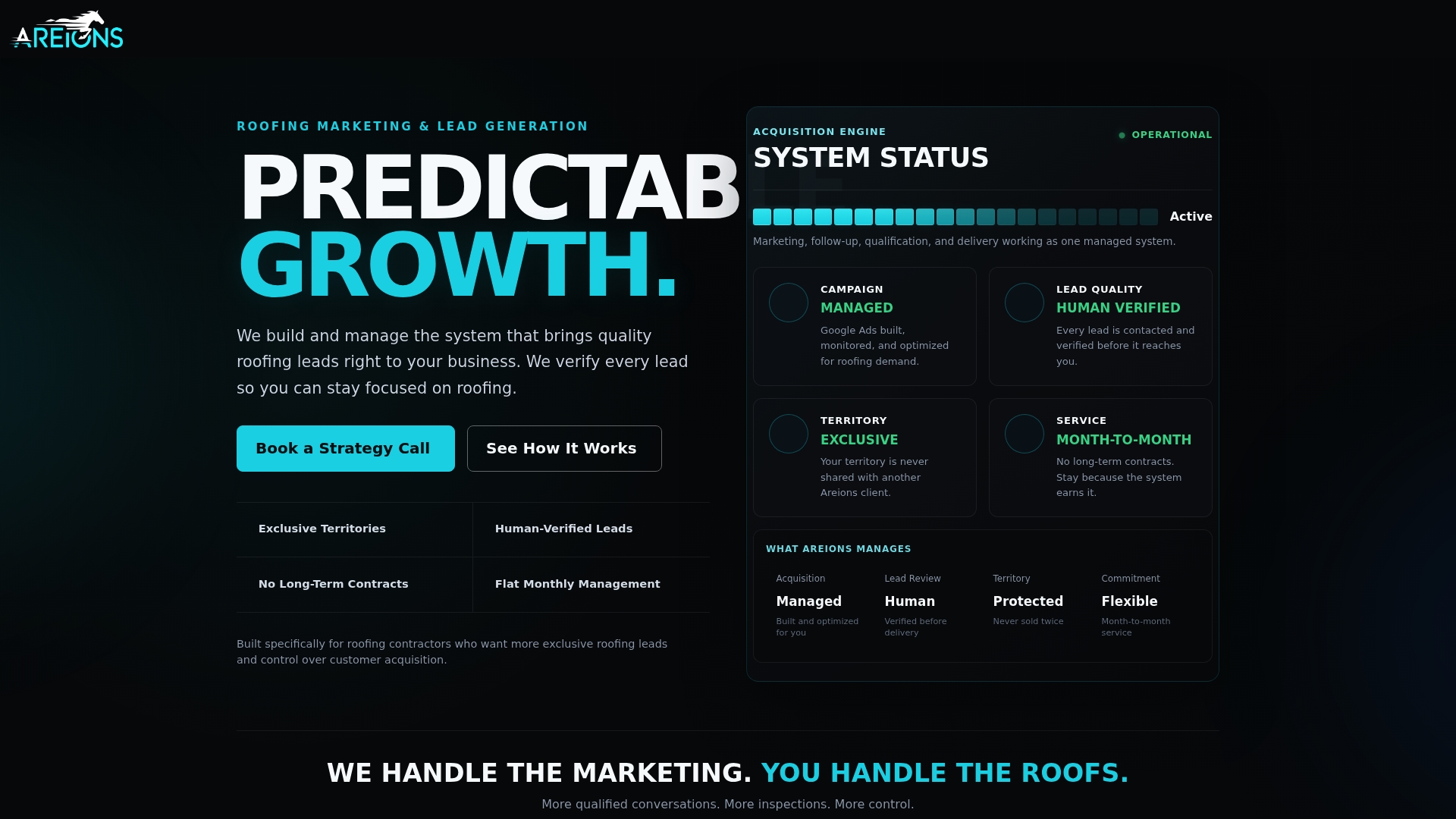
Plans run month-to-month with no long-term contract, starting at Foundation for $97 per month, scaling to Professional at $1,500 per month and Enterprise at $5,000 per month depending on the level of exclusivity and campaign management you need. If you’d rather see how this fits your market before committing, book a strategy call and we’ll walk through what a storm-response setup looks like for your territory.
Once DNI data starts flowing, pairing it with geo-grid rank tracking can show you which neighborhoods are generating calls but lagging in local search visibility, useful for prioritizing where to expand coverage next. For roofing operations juggling multiple ad platforms and wanting deeper multi-touch modeling beyond phone attribution, revenue attribution services can extend the CRM automation layer further.

FAQ
What is the 25% rule in roofing?
Rules vary by local jurisdiction, so check with your local building department or roofing inspector for the specific threshold that applies to your area.
How are roofers getting my number?
Roofing companies typically collect phone numbers through online lead forms, call tracking numbers displayed on ads and landing pages, direct inquiries, or public records tied to permits and insurance claims after storm events. If you’ve requested a quote or clicked a roofing ad, dynamic number insertion may have been part of how that call got routed and recorded.
Why do insurance companies not like rolled roofing?
Insurance companies often view rolled roofing as a lower-durability material compared to asphalt shingles or other standard roofing systems, which can affect coverage terms or premiums. Specific underwriting decisions vary by insurer and policy, so homeowners should confirm material requirements directly with their insurance provider before installation.
Is $30,000 too much for a roof?
Roof costs vary widely based on square footage, material choice, roof pitch, and regional labor rates, so there’s no single answer to whether a given price is too high. Getting multiple quotes from licensed local contractors is the most reliable way to confirm whether a specific price reflects fair market value for your project.
Sources
These primary sources cover technical setup, testing, and legal disclosure requirements referenced throughout this guide.
- What is dynamic number insertion? | CallRail blog
- Dynamic number insertion overview – CallRail Help Center
- About phone call conversion tracking - Google Ads Help
- Wire and electronic communications statute — Cornell Law (18 U.S.C. §2511)