
Cut Roofing CPL to $50 to $200: A 90 Day SEO and PPC Playbook
Run PPC now, build SEO in parallel, and let the two feed each other. PPC can put your phone ringing within hours of launch, while roofing SEO takes 3 to 6 months to show movement and 6 to 18 months to compound into cheap, steady leads. Roofers with an empty pipeline need speed now; the ones who want a $50 to $200 cost per lead by year two need to start SEO today, not after the next storm hits. Areions builds both into one storm-response system instead of forcing you to pick.
TL;DR:
- PPC can generate leads within hours, but it is costly and short-lived; meanwhile, SEO takes 3 to 6 months to show results and requires consistent effort.
- Building effective roofing SEO involves ongoing work such as optimizing Google Business Profiles, creating local service pages, and earning reviews, with measurable ranking improvements occurring over several months.
- Cost per lead through SEO drops significantly after the first year, averaging $50 to $200, compared to PPC’s $150 to $800 in initial months, and offers higher close rates.
- Combining PPC and SEO ensures immediate lead flow while gradually lowering long-term costs, especially during storm seasons when pre-built campaigns activate faster.
- A storm-response system like Areions offers managed, exclusive leads tied to weather events, with flexible plans from $97 to $5,000 monthly, guaranteeing qualified storm damage leads within 30 days.
Table of Contents
- Roofing SEO vs. PPC: What Does SEO Actually Do?
- What Does PPC Do for Roofers, and How Fast Does It Work?
- How Do SEO and PPC Compare on Speed, Cost, and Quality?
- When Should You Prioritize PPC vs. SEO?
- How Do You Run SEO and PPC Together in 90 Days?
- Why an Integrated Channel Strategy Beats Picking One
- A Managed Path to Storm-Ready Roofing Leads
- Sources
- FAQ
Roofing SEO vs. PPC: What Does SEO Actually Do?
Search engine optimization for roofers is not a single tactic. It is a bundle of ongoing work: cleaning up your Google Business Profile, building out local service pages for every city and township you cover, publishing content on actual roofing problems (hail damage, ice dams, insurance claims), collecting reviews on a schedule, fixing inconsistent business citations across directories, and earning backlinks from local sources. None of it fires instantly.
Roofing SEO typically shows measurable local ranking gains within 3 to 6 months, with stronger page-one positions arriving 6 to 18 months in. That is not a flaw in the strategy. It is how search engines work: they reward consistency and trust signals accumulated over time, not a burst of activity in week one.
Cost per lead falls the longer you invest. PPC cost per lead for roofing companies commonly runs $150 to $800 depending on market competition, while organic SEO cost per lead often drops to roughly $50 to $200 by year two, once rankings stabilize.
The mistakes that waste an SEO budget are predictable:
- Publishing templated, generic blog content that never targets a specific city or roofing problem.
- Ignoring the Google Business Profile, which drives most local map pack visibility.
- Building traffic without a conversion-focused landing page, so visitors leave without calling.
- Skipping review generation, which quietly kills local trust signals over time.
SEO rewards patience, but only when the foundation work gets done in the right order.
What Does PPC Do for Roofers, and How Fast Does It Work?
Pay-per-click advertising for roofing companies comes in two main flavors: traditional Google Search Ads and Google Local Service Ads (LSA). Search Ads put you at the top of results for keywords like “roof replacement near me,” billed per click. LSA works differently. It shows a verified badge, charges per lead instead of per click, and often produces lower-cost, high-intent leads for home service businesses.
Both can go live the same day you launch. Google Ads can generate leads within hours to days of activation, which is the entire reason PPC exists as a category: it buys immediate visibility that SEO cannot.
That speed comes with real risk if you skip the fundamentals. Cost-per-click on roofing keywords inflates fast in competitive metros, and a generic homepage will burn budget without converting. Best practice looks like this:
- Build a dedicated landing page for each core service (roof replacement, storm repair, gutter work) instead of sending clicks to your homepage.
- Maintain a negative keyword list so you are not paying for clicks from people searching “how to fix a roof myself.”
- Install call tracking so you know which keyword or ad actually produced the phone call.
- Geo-target tightly to your service area, and keep storm campaigns built and ready to switch on the moment a system hits your region.
Pro Tip: Build your storm campaign structure before storm season starts, not during it. Ad accounts with existing history and quality scores activate faster and cheaper than accounts built from scratch mid-storm.
The tradeoff is that PPC visibility disappears the moment you pause spending. There is no residual value sitting in search results the way there is with SEO content.
How Do SEO and PPC Compare on Speed, Cost, and Quality?
The two channels solve different problems, and the numbers make that obvious.
| Factor | PPC (Google Ads/LSA) | SEO |
|---|---|---|
| Time to first lead | Hours to days | 3 to 6 months |
| Cost per lead, year 1 | $150 to $800 | Higher upfront, no direct per-lead spend |
| Cost per lead, year 2+ | Similar or rising with competition | Often $50 to $200 |
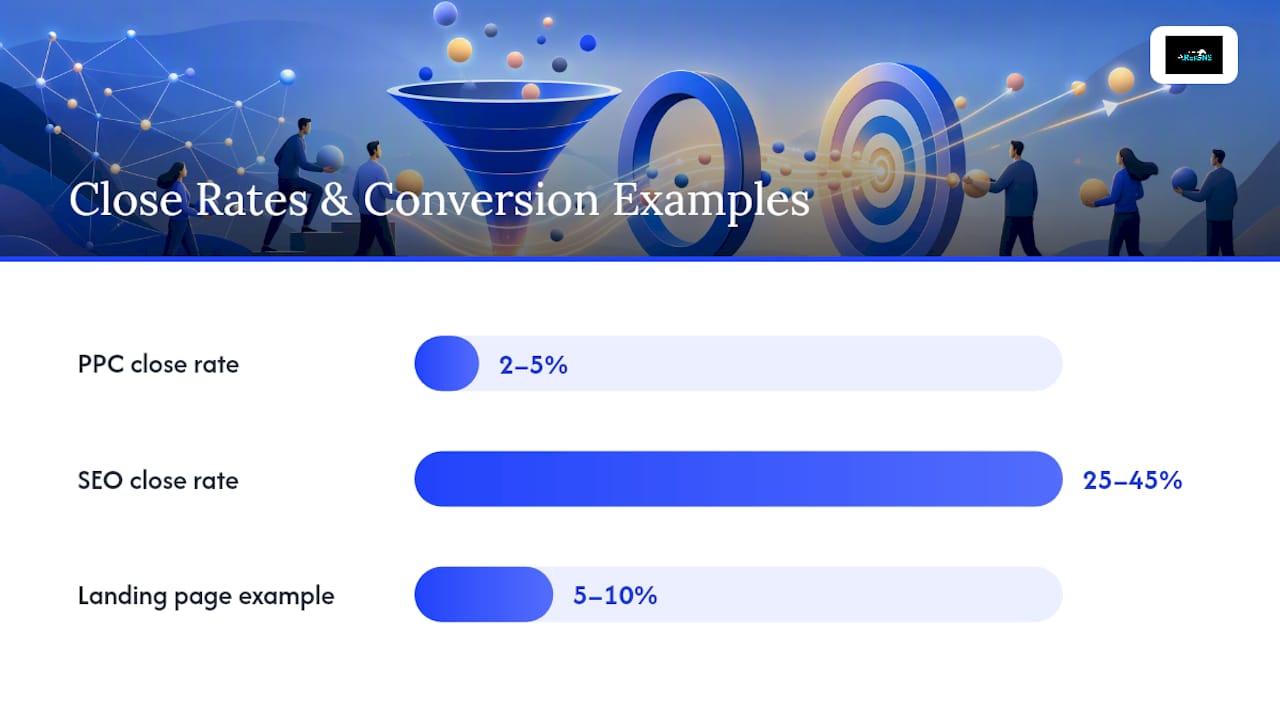
| Close rate | Roughly 2% to 5% in some published estimates | Roughly 25% to 45% in some published estimates |
That close-rate gap deserves attention. Organic visitors have usually already decided they need a roofer and are comparing options, while a chunk of paid clicks come from people still in the research phase. This is also why landing page quality changes your math more than almost anything else: improving conversion rate from 5% to 10% cuts your cost per lead in half at the exact same cost-per-click. A roofer spending $400 to generate a lead through a weak landing page can often cut that to $200 just by fixing the offer and the form.
PPC also does something SEO cannot do on its own: it generates data fast. The keywords and offers that convert in your ad account tell you exactly what to build content around for organic growth.
When Should You Prioritize PPC vs. SEO?
The right channel depends on where your business sits, not on which one sounds more sophisticated.
- Empty pipeline, need jobs this month. Run PPC immediately. Nothing else fills a calendar as fast.
- Entering a new market or territory. Run PPC and local SEO together from day one, since neither channel alone builds trust in an unfamiliar area quickly.
- Storm season approaching. Keep Local Service Ads always-on and Google Ads campaigns pre-built and ready to activate, because storm-ready marketing captures far more revenue than ad-hoc activation after weather events.
- Stable pipeline, looking to lower cost per lead. Shift budget gradually toward SEO as organic rankings mature and start reducing reliance on paid clicks.
A storm-focused operation should never fully turn off paid activation, even while SEO investment grows in the background.
Pro Tip: Track cost per lead monthly by channel. The moment organic CPL drops below your PPC CPL for the same lead quality, that is your signal to shift more budget toward SEO.
How Do You Run SEO and PPC Together in 90 Days?
You do not have to choose one channel and abandon the other. Here is a sequence that gets leads flowing while building the asset that lowers cost over time.
Days 0 to 7:
- Launch PPC with dedicated service landing pages, not your homepage.
- Install call tracking on every ad group.
- Build a negative keyword list before spending a dollar.
- Set daily spend caps so testing does not drain the monthly budget in week one.
Weeks 2 to 12:
- Clean up and fully optimize your Google Business Profile.
- Build local service pages for every city or county you actually serve.
- Launch a review generation campaign tied to completed jobs.
- Pull top-converting keywords from PPC data and build organic content around them.
Measurement ties it together. Set clear conversion goals, connect your ad platforms and website to your CRM, and define the specific signals (falling PPC efficiency, rising organic traffic) that trigger a budget shift toward SEO. A tool like automated follow-up systems can help make sure leads from either channel do not go cold while you are focused on campaign setup.
Why an Integrated Channel Strategy Beats Picking One
Roofers who treat SEO and PPC as rivals end up underfunding whichever one loses the argument, and it is almost always SEO that gets neglected until the next slow season forces a rethink. The businesses with the steadiest pipelines run both, because PPC covers the gap while SEO compounds underneath it. Storm-ready infrastructure matters more than either channel alone: a contractor with pre-built campaigns and a qualification system captures a storm event that a competitor scrambling to set up ads three days late simply misses. Be skeptical of any vendor promising fast SEO wins with no storm infrastructure behind them. Rankings without a system to qualify and route the leads they produce is a half-finished plan.
— Angel
A Managed Path to Storm-Ready Roofing Leads
Building a dual-channel system in-house means managing ad accounts, landing pages, call tracking, CRM integration, and lead qualification all at once, on top of running roofing jobs. Areions runs that entire system for you, built specifically around storm-response demand instead of generic lead forms.
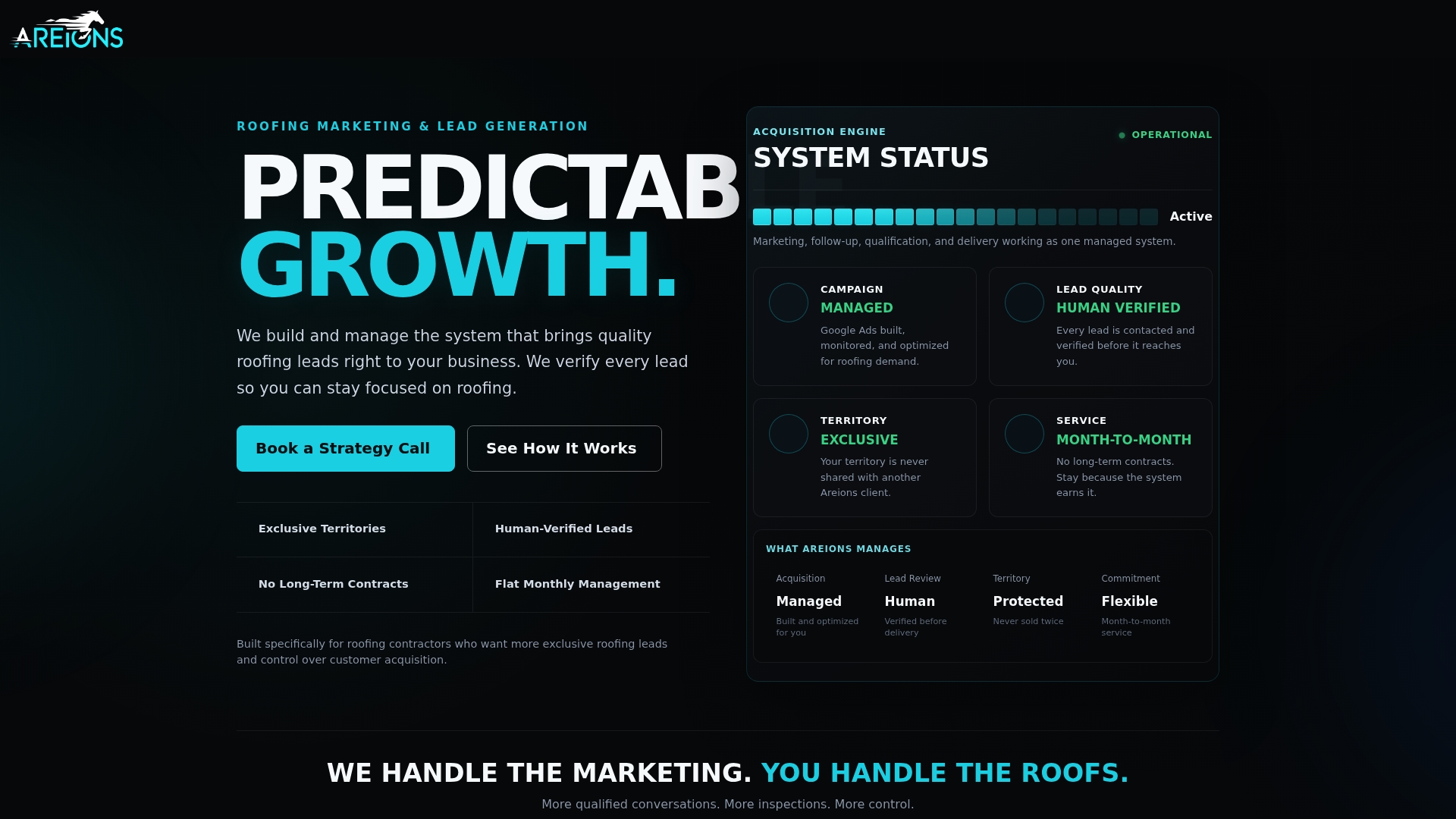
Areions delivers human-verified, exclusive leads tied to actual storm damage in your territory, with campaigns kept ready to activate the moment weather hits your service area. There is no long-term contract; service runs month-to-month, and Areions guarantees qualified leads within 30 days. This fits roofing operators who want a managed marketing funnel and fast activation. Plans run from the Foundation tier at $97 per month up to Enterprise at $5,000 per month, scaled to how much lead volume and territory exclusivity you need. If you want to see which tier fits your market, book a strategy call and get a straight answer on what it would take to run your storm response.
Sources
FAQ
Which Is Better, PPC or SEO, for Roofing Companies?
Neither wins outright. PPC produces leads within hours to days, while SEO builds a compounding asset that eventually lowers your cost per lead. Most roofing companies get the best results running both at once, using PPC for immediate volume and SEO for long-term efficiency.
What Is the 25% Rule for Roofing?
It is a general budgeting guideline, not a fixed industry standard, so treat it as a starting benchmark rather than a strict cap.
What Is the Best Advertising for a Roofing Company?
The strongest results come from combining Local Service Ads for high-intent, lower-cost leads with search ads for broader keyword coverage, backed by local SEO for long-term visibility. Storm-ready campaigns that activate immediately after weather events, like the system Areions builds for its clients, tend to capture the highest-value demand.
What Is a Downside of Pay-Per-Click Advertising?
Visibility disappears the instant you stop paying, unlike SEO content that keeps working after it ranks. PPC also carries close rates around 2% to 5% in some published estimates, lower than organic traffic, so a weak landing page can burn through budget fast without a fix to conversion rate.
How Much Should a Roofing Company Budget for PPC vs. SEO?
There is no universal split. A new business often runs closer to 80% PPC and 20% SEO to fill the pipeline immediately, shifting toward heavier SEO investment as organic rankings mature. Storm-focused operators should keep Local Service Ads always-on regardless of how the rest of the budget is allocated.