
Best Lead Distribution Software for Roofers: Managed Storm-Response
For U.S. roofing companies, the best lead distribution software isn’t standalone SaaS. It’s a managed, roofing-specialist storm-response service that qualifies leads by phone, delivers them directly to your CRM, and guarantees results within 30 days on a month-to-month contract.
The reason is straightforward: roofing demand spikes after storms, and a generic routing tool can’t activate a pre-built campaign, verify a homeowner’s damage claim, or protect your territory. A managed partner does all three before the lead ever reaches your pipeline.
Your first three moves before signing anything:
- Ask for a sample dashboard export showing booked appointments and cost-per-booked-job, not just impressions or clicks.
- Request proof of human verification, including recorded call samples.
- Confirm in writing that you own the domain, ad accounts, and tracking numbers if you leave.
Pro Tip: Request a 30-day pilot with a written performance guarantee before committing to any ongoing spend. Any credible partner will agree to this.
Table of Contents
- Why roofing needs a specialized, managed lead-distribution system
- What core features must the best lead-distribution service include?
- How do you evaluate vendors before committing?
- How Areions maps to buyer criteria and what months 1–3 look like
- Key Takeaways
- Why the managed approach is the right call for roofers
- Get qualified roofing leads from Areions in 30 days
Why roofing needs a specialized, managed lead-distribution system
Generic lead software routes contacts. It doesn’t know the difference between a homeowner with fresh hail damage and someone browsing roof colors in January. That gap costs roofers real money.

Roofing demand is seasonal and event-driven. A Category 1 hailstorm can generate hundreds of inbound calls in 72 hours. Specialized roofing agencies outperform generalists precisely because they understand storm seasonality, insurance claim workflows, and local competition in ways a generalist never will. When a storm hits your market, a managed partner with a pre-built storm funnel can activate within hours. An in-house team building campaigns from scratch takes days.
The operational difference matters at every step. Human-verified qualification means a real person confirms the homeowner has storm damage, owns the property, and is ready to schedule. That’s not something a form fill or an automated ping-post delivers. Combine that with CRM-integrated routing and live call handling, and your sales team receives a warm, verified opportunity instead of a raw name and number.
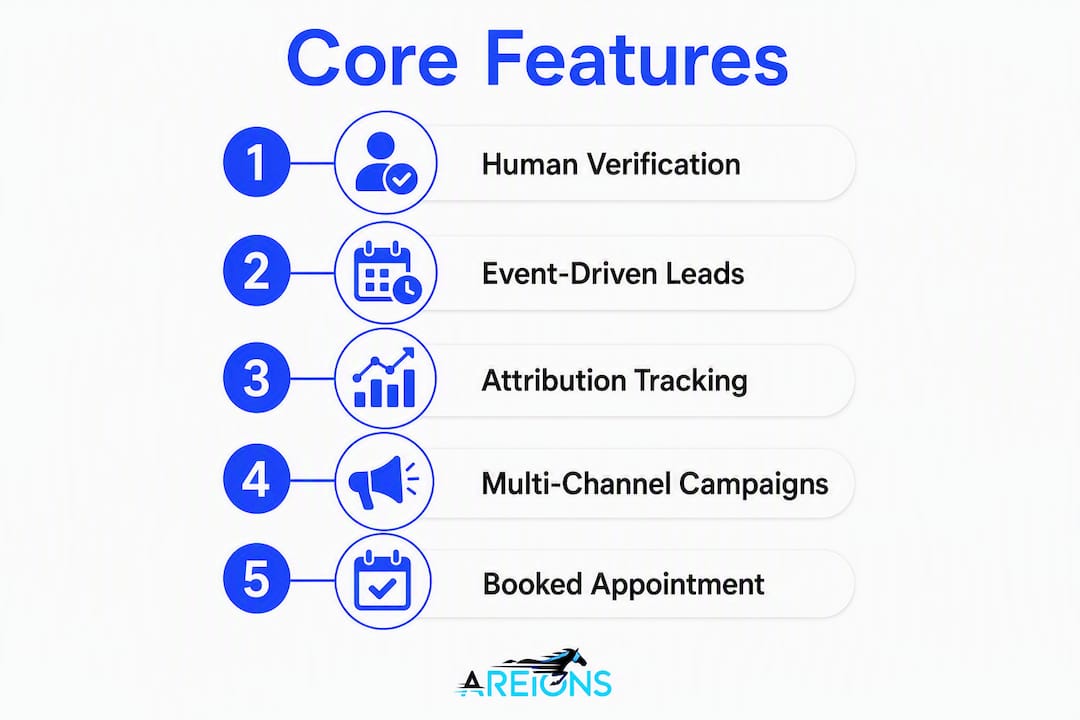
Attribution is where most roofing companies get burned. Impressions and clicks tell you nothing about whether a job got booked. Transparent reporting that tracks booked appointments and cost-per-booked-job is the only metric that connects marketing spend to actual revenue.
Pro Tip: Before you sign any marketing contract, add a clause specifying that you retain admin access to your Google Ads account, Google Business Profile, GA4, call tracking platform, and landing pages. Losing those assets when you switch providers is a costly, avoidable problem.
What core features must the best lead-distribution service include?
Not every managed service is built the same. Here’s what to require before you commit:
- Human-verified lead qualification with recorded calls you can audit.
- Booked-appointment tracking tied to individual lead sources, not just total call volume.
- Cost-per-booked-job attribution so you know exactly what each closed opportunity cost.
- CRM and telephony integration with automated routing and SLA-based delivery windows.
- Territory exclusivity with written protection against lead duplication in your zip codes.
- Surge capacity for storm events, including pre-built campaigns that activate on weather triggers.
- Dispute window and credit policy documented in the contract, with call-duration thresholds that define a valid lead.
On pricing, CPL ranges for roofing vary significantly by market with costs depending on lead exclusivity and competition. Shared leads cost less upfront but split your close rate across multiple contractors. Exclusive leads cost more and almost always deliver better economics when your close rate is above average.
A well-structured campaign layers channels rather than relying on one. A three-layer approach combining LSAs, paid search, and pre-built storm campaigns captures both steady baseline volume and high-demand storm surges. A common allocation balances sustainable channels with storm-ready campaigns to cover steady volume and demand surges.
Pro Tip: Define “lead” in the contract before you sign. Specify minimum call duration (typically 60–90 seconds), accepted inbound channels, and what evidence is required to dispute a charge. Vague definitions always favor the vendor.
How do you evaluate vendors before committing?
Work through these steps in order. Skip one and you’ll likely regret it.
- Verify roofing specialization. Ask for examples of storm-response campaigns they’ve run in your state. A generalist who “also does roofing” is not the same as a team built around it.
- Request booked-appointment attribution proof. Ask to see a real dashboard, not a screenshot. You want to see how leads map from source to scheduled appointment to closed job.
- Test their intake and qualification workflow. Call their intake line as a mystery shopper. How fast does someone answer? What questions do they ask? Do they verify damage and ownership?
- Confirm asset ownership in writing. Your contract should explicitly grant you admin access to Google Ads, your Google Business Profile, GA4, call tracking, and any landing pages built on your behalf.
- Ask for territory exclusivity terms and storm surge rules. Get the exact zip codes in writing, and ask what happens to your exclusivity if a major storm hits and volume spikes.
Key metrics to demand in writing: cost-per-booked-job, booked-job conversion rate, time-to-first-lead, call answer rate, and the dispute/credit policy with defined windows.
Red flags that should end the conversation:
- Reporting that shows only impressions, clicks, or “leads delivered” with no booked-appointment data.
- Asset lock-in clauses that keep your domain, ad accounts, or tracking numbers if you cancel.
- No CRM or telephony integration.
- Long-term contracts without performance SLAs.
Before you sign, request three things: a sample dashboard export, two or three call recordings from a recent campaign, and the exact contract language on asset ownership and dispute credits. If a vendor hesitates on any of these, that hesitation is your answer.
Analyze your last 60 signed jobs and tag each as insurance-restoration or retail-replacement. That split tells you whether exclusive leads or a blended model fits your business better, and it gives you a benchmark to hold any new vendor accountable.
How Areions maps to buyer criteria and what months 1–3 look like
Areions is built specifically for roofing companies that want a managed system, not another tool to babysit. Every feature on the checklist above is part of the core offering.
How Areions meets the standard requirements:
- Human-verified homeowner qualification with recorded calls.
- Direct CRM delivery with automated lead routing and follow-up.
- Territory exclusivity with written zip-code protection.
- Booked-appointment tracking and cost-per-booked-job reporting.
- Month-to-month terms with a qualified-leads-in-30-days guarantee.
- Google Ads campaign management, landing page creation, and optional website redesign and SEO.
The onboarding timeline is realistic. Paid search campaigns typically stabilize in 2–6 weeks; new landing pages take 4–10 weeks to build and index. Here’s what the first three months look like:
| Milestone | Expected Timeframe |
|---|---|
| Account setup, CRM integration, asset transfer | Week 1–2 |
| Landing page build and campaign activation | Week 2–4 |
| First qualified leads delivered to CRM | By Day 30 (guaranteed) |
| Storm-response funnel activated and tested | Week 3–5 |
| Campaign stabilization and KPI baseline | Week 4–8 |
| Full attribution reporting (booked appts, CPL) | Month 2 onward |
The 30-day guarantee is the clearest signal of a partner who is confident in their system. If a vendor won’t commit to delivering qualified leads within 30 days on a month-to-month contract, ask why.
Conversion-engineered landing pages are part of what drives those early results. A page built for “hail damage roof repair [city]” with a clear call-to-action converts at a fundamentally different rate than a generic homepage.
Key Takeaways
A managed, roofing-specialist storm-response service that guarantees qualified leads within 30 days, delivers directly to your CRM, and operates on month-to-month terms is the right lead-distribution model for U.S. roofing companies.
| Point | Details |
|---|---|
| Demand booked-appointment attribution | Require cost-per-booked-job reporting, not just impressions or clicks. |
| Secure asset portability before signing | Get written admin access to your ad accounts, domain, and tracking numbers. |
| Exclusive leads deliver better economics | In competitive markets, exclusive leads (typically $60–$220 CPL in competitive cities, with $30–$75 for LSA leads) outperform shared leads when your close rate is strong. |
| Run a 30-day pilot first | Month-to-month terms with a performance guarantee protect you before you scale spend. |
| Areions as the managed option | Areions delivers human-verified, CRM-routed exclusive leads with a 30-day guarantee and no long-term contract. |
Why the managed approach is the right call for roofers
The conventional wisdom says roofing companies should own their marketing stack: build the website, run the ads, manage the CRM, and hire someone to handle the phones. That sounds like control. In practice, it’s a second full-time job that pulls the owner away from the work that actually generates revenue.
The managed model isn’t about outsourcing accountability. It’s about concentrating your attention where it belongs: closing jobs, managing crews, and handling supplements. When a storm hits your market at 2 AM, you don’t want to be logging into Google Ads to activate a campaign. You want qualified homeowners calling your team by 8 AM.
What most roofers underestimate is how much the attribution gap costs them. Without booked-appointment tracking tied to individual lead sources, you’re making budget decisions based on incomplete data. A managed partner who reports on cost-per-booked-job gives you the one number that actually tells you whether the spend is working.
Balance matters too. Storm channels generate volume, but sustainable channels like local SEO and LSAs keep the pipeline moving between events. A smart monthly budget allocates to both, so a quiet weather month doesn’t mean a quiet revenue month.
Get qualified roofing leads from Areions in 30 days
If you’ve been paying for leads that don’t convert, or working with an agency that reports clicks instead of booked appointments, the gap is the system, not your sales team.
Areions gives roofing companies a fully managed storm-response lead-generation system: Google Ads campaigns, conversion-optimized landing pages, human-verified homeowner qualification, CRM delivery, and territory exclusivity, all on a month-to-month contract with no long-term lock-in. The 30-day qualified-lead guarantee means you see results before you scale.
When you reach out, ask for a sample dashboard export, a recorded call example, and the contract language on asset ownership. Those three items tell you everything you need to know about whether a partner is worth trusting.
Request your 30-day pilot and see what a managed system built for roofing actually delivers.